Short answer
Mochi is a soft, chewy Japanese rice cake made by pounding or steaming glutinous rice into a smooth, stretchy dough. It is eaten plain, filled with sweet bean paste or ice cream, or added to desserts such as shaved ice. Korean chapssal tteok is a close relative.
Mochi is a soft, chewy Japanese rice cake made by pounding or steaming glutinous rice into a smooth, stretchy dough that is shaped into small pieces and eaten plain, filled or coated. Mochi appears in sweets, soups and frozen desserts, and Korean chapssal tteok is a close relative.
What is mochi?
Mochi is a rice cake from Japan made from mochigome, a short-grain glutinous rice. The cooked rice is pounded into a sticky, elastic dough that is moulded into pieces and dusted with starch to prevent sticking.
The word mochi covers both the dough and the many sweets made from it. In Japan mochi has a long place in festivals and the New Year, when it is eaten in a soup called ozoni. Elsewhere in Asia there are related rice cakes, including Korean tteok and Chinese tangyuan.
How is mochi made?
Mochi is made by steaming glutinous rice and pounding it until the grains melt into one smooth dough. This pounding, called mochitsuki, is traditionally done with a wooden mallet in a large mortar.
Many home and commercial cooks skip the pounding. They mix glutinous rice flour with water and sugar and cook the batter in a microwave or steamer, then knead it until it stretches. The result is softer and a little less dense than pounded mochi.
- Steam soaked glutinous rice, or cook a batter of glutinous rice flour and water.
- Pound or knead the hot dough until smooth and elastic.
- Dust the work surface with potato or corn starch.
- Cut or shape the dough and wrap it around fillings if wanted.
What are the main types of mochi?
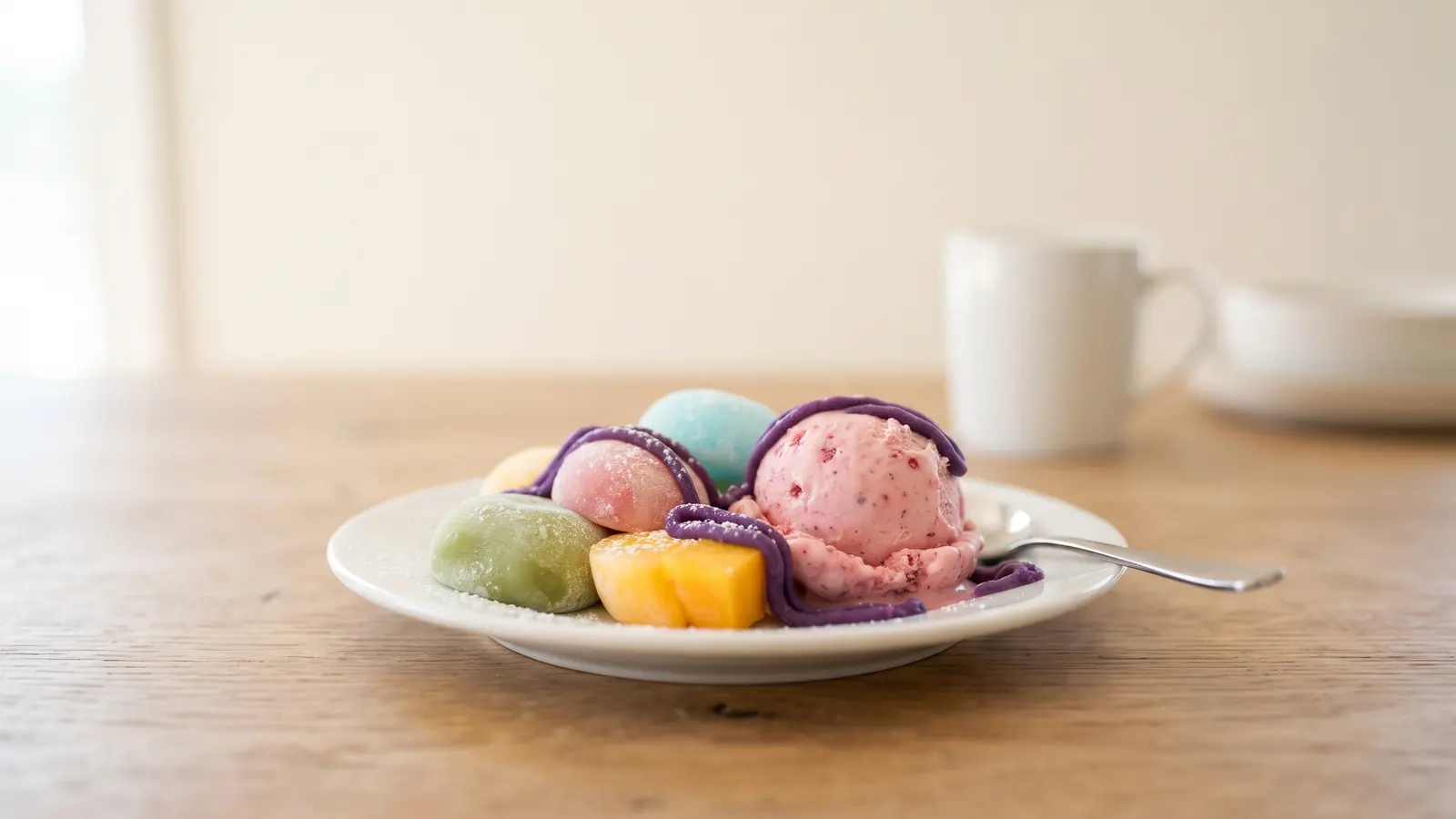
The main types of mochi are plain pounded mochi, daifuku filled with sweet bean paste, mochi ice cream, and mochi coated in powders such as roasted soybean flour. Each type changes the texture and sweetness.
| Type | What it is |
|---|---|
| Daifuku | A round mochi wrapped around sweet red bean paste, sometimes with fruit |
| Mochi ice cream | A ball of ice cream wrapped in a thin, soft mochi shell |
| Kirimochi | Dried, hard blocks that soften when grilled or simmered |
| Kinako mochi | Mochi coated with roasted soybean powder and sugar |
| Chapssal tteok | The Korean glutinous rice cake, used in desserts and bingsoo |
What does mochi taste and feel like?
Mochi tastes mildly sweet and slightly milky, and the texture is soft, smooth and stretchy. The chew is the main attraction, since the dough pulls and springs back.
The flavour is gentle because the dough is mostly rice and a little sugar. Fillings and coatings set the character: red bean is earthy, soybean powder is nutty, matcha is grassy and fruit is bright. Fresh mochi is the softest, and cold mochi turns firmer.
What is the difference between mochi and tteok?
Mochi is the Japanese rice cake and tteok is the Korean one, and both are made from rice. Tteok is a broad category that includes steamed, pounded and boiled rice cakes in many shapes.
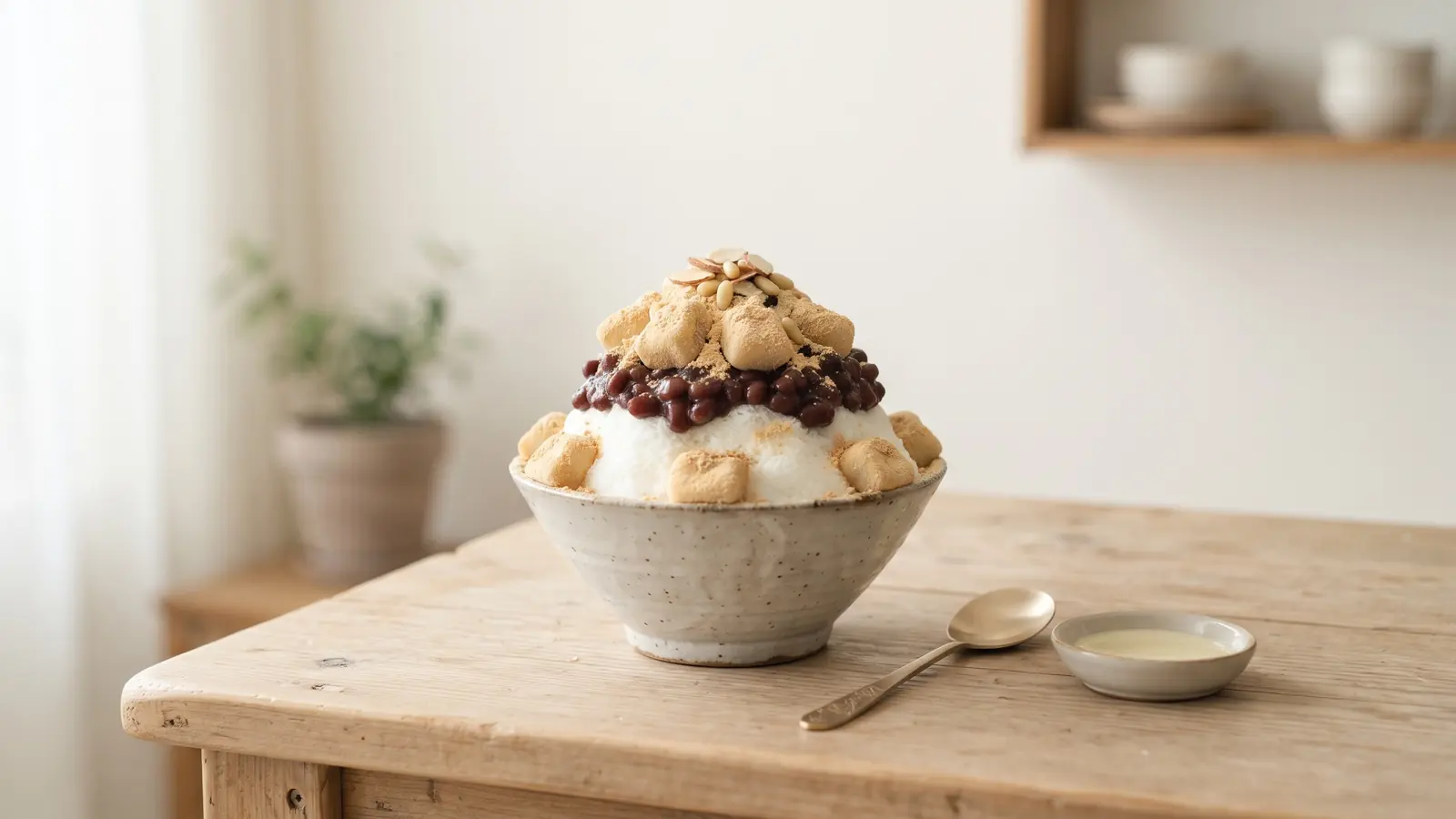
Chapssal tteok, made from glutinous rice, is the Korean cousin closest to mochi. It is used in bingsoo as small chewy cubes and in injeolmi, the rice cake coated in soybean powder. Cafes outside Korea often call these pieces mochi in English, so the two names are used loosely on menus.
How do you eat mochi?
Mochi is eaten in small bites, chewed well, with tea or on its own. Plain or filled mochi is picked up with fingers or a small fork, and it can also be grilled, simmered or added to desserts.
- Eat fresh daifuku the same day for the best softness.
- Grill kirimochi until it puffs, then dip it in soy sauce or sweet syrup.
- Add small rice cake pieces to shaved ice or soup.
- Serve frozen mochi ice cream after a few minutes at room temperature.
How should you store mochi?
Fresh mochi keeps best the day it is made. Wrapped tightly, it stays soft for a day or two at room temperature, and freezing is the standard way to keep it longer.
Refrigerating mochi makes it hard, because rice starch firms up in the cold. Hardened mochi can be softened by warming it briefly. Frozen mochi is thawed at room temperature in its wrapper, which prevents it drying out.
What is mochi made of?
Mochi is made of glutinous rice or glutinous rice flour, water and usually a little sugar. Starch from potato or corn is used for dusting so the sticky dough does not cling to hands and surfaces.
Glutinous rice, also called sweet rice or sticky rice, is a short-grain variety that becomes sticky when cooked. The name can mislead, because it has no wheat gluten. Fillings add other ingredients: red bean paste, white bean paste, fruit, sesame, custard or ice cream.
What flavours does mochi come in?
Mochi comes in flavours such as red bean, matcha, strawberry, mango, sesame, peanut and roasted soybean powder. The dough itself is mild, so flavour usually comes from the filling or the coating.
- Red bean: earthy and gently sweet, the classic daifuku filling.
- Matcha: grassy, often in the dough or the ice cream inside.
- Strawberry: fruit wrapped in a thin layer of mochi and sweet bean paste, called ichigo daifuku.
- Mango: soft, sweet fruit with cream, a more modern filling.
- Kinako: roasted soybean powder, nutty and fragrant.
- Sesame: toasted, slightly savoury and rich.
Is mochi a snack, a dessert or a meal?
Mochi is eaten as a sweet, a snack and, in savoury forms, as part of a meal. Daifuku and mochi ice cream are desserts, while kirimochi grilled with soy sauce and seaweed is a simple savoury snack.
In Japanese homes mochi also goes into soups and hot pots. In Korea, tteok is a staple of celebrations and everyday snacks. Because the types differ so much, the word mochi on a menu is best read as a clue about texture rather than a single dish.
Where does mochi appear at Fluffle Cafe?
Fluffle Cafe’s recorded menu lists mochi as a topping on the injeolmi croffle, described as topped with roasted soybean powder, red bean and mochi. The DaeJi Bar Bingsoo, with its mochi brownie, is also listed as a summer 2026 festival item.
A standalone mochi item is not on the recorded menu. The details come from public listings that may be out of date, so check the menu page and call or check Instagram before going. See the hours and location page for the address. This guide is independent and takes no orders.
Common questions
Is mochi gluten-free?
Mochi is made from glutinous rice, which despite its name contains no wheat gluten. Fillings and coatings vary, so the label or the maker should confirm the full ingredients if you avoid gluten.
Why is mochi so chewy?
Glutinous rice is high in a starch called amylopectin, which becomes sticky and elastic when cooked and pounded. That structure gives mochi its signature stretchy, bouncy chew.
How long does mochi stay soft?
Fresh mochi is best the day it is made and firms up within a day or two at room temperature. Wrapped tightly, it keeps its softness longer, and freezing is common for longer storage.
Can mochi be a choking hazard?
Mochi is sticky and dense, so it should be cut into small pieces and chewed well, particularly for young children and older adults. Food safety agencies in Japan repeat this advice each New Year.
What does mochi taste like?
Plain mochi tastes mild, lightly sweet and slightly milky, like cooked rice. Most of the flavour comes from fillings and coatings such as red bean, soybean powder, matcha or fruit.
For the address, opening hours and menu, see Fluffle Cafe in Richmond.
This article is general information from an independent guide, not from Fluffle Cafe itself. For the store’s current details see hours and location.