Short answer
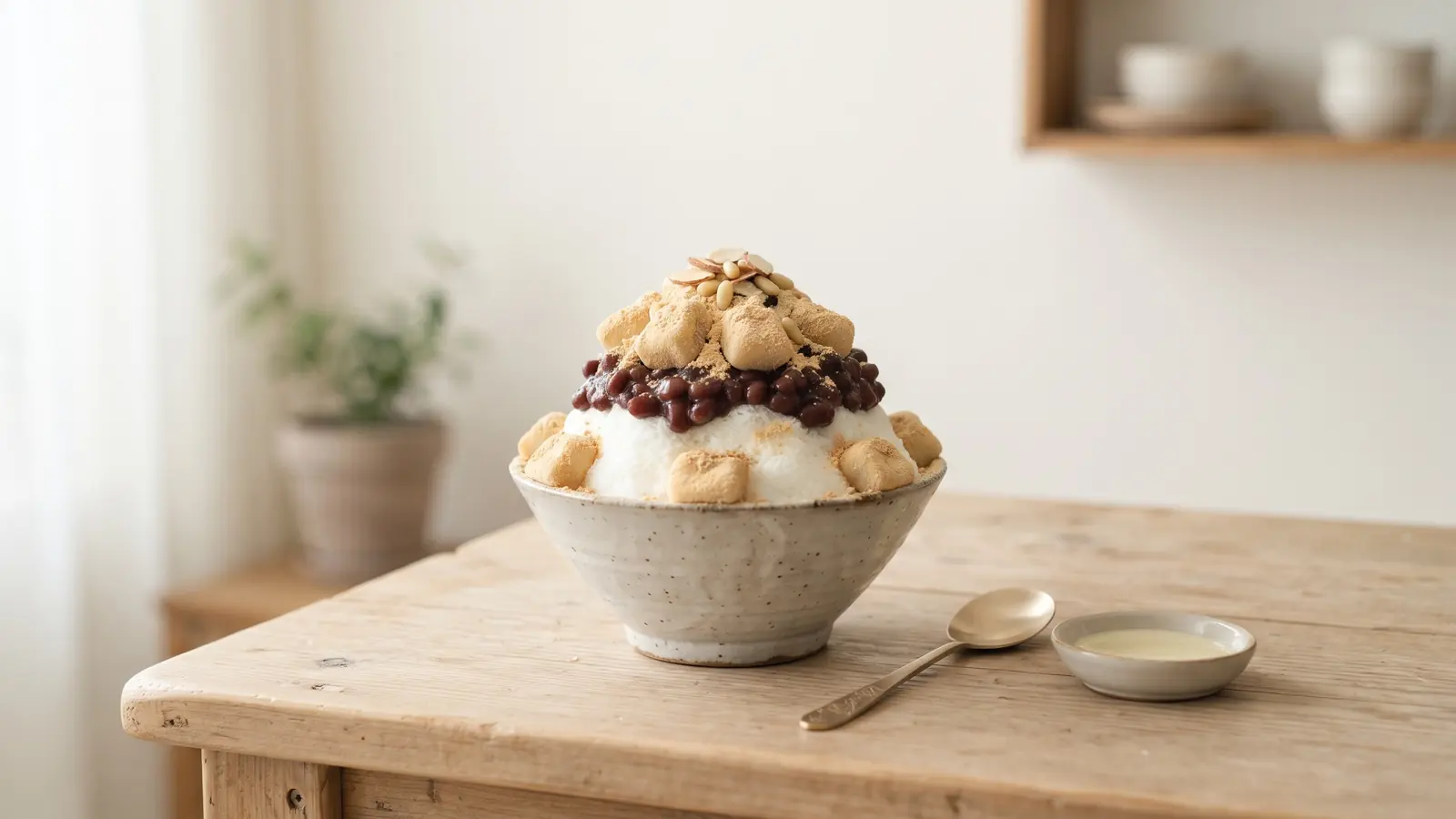
Bingsoo is a Korean shaved ice dessert in which a block of frozen milk or flavoured ice is shaved into soft, snow-like flakes and topped with red bean, roasted soybean powder, fruit, rice cakes or syrup. It is usually served in a large bowl and eaten with spoons.
Bingsoo is Korean shaved ice: a block of frozen milk or flavoured ice shaved into fluffy, snow-like flakes and piled in a bowl with toppings such as sweet red bean, roasted soybean powder, fresh fruit and rice cakes. Bingsoo is a dessert eaten with spoons and is often shared.
What is bingsoo?
Bingsoo, also written bingsu, is a Korean dessert of finely shaved ice with sweet toppings, served in a large bowl for sharing. The Korean word bing means ice and su means water.
The dessert belongs to the wider family of shaved ice sweets found across East Asia, but Korean bingsoo has a distinct style. The ice is soft and feathery, the toppings are generous, and the bowl is built to be eaten from the top down. Bingsoo is served in dessert cafes in Korea and in Korean cafes across Canada and the United States.
How is bingsoo made?
Bingsoo is made by freezing a liquid, usually sweetened milk, into a solid block and shaving the block in a machine until it forms fine ribbons of ice. The ribbons are heaped into a mound and topped.
The key step is the milk block. Plain water ice shaves into crisp, crunchy flakes. Milk ice shaves into soft, silky flakes with a creamy flavour. Some cafes also freeze fruit juice, tea or coffee into blocks for other flavours.
- A flavoured liquid is frozen into a block.
- The block is shaved in a bingsoo machine to a fine, fluffy texture.
- The ice is heaped into a bowl, often leaving a small dip in the middle.
- Toppings, sauces and sometimes ice cream or sorbet go on top.
What toppings go on bingsoo?
The classic bingsoo toppings are sweet red bean paste, roasted soybean powder, rice cakes, condensed milk and fresh fruit. Modern cafes add ice cream, cereal, brownie, cookie crumble and syrups.
| Topping | What it adds |
|---|---|
| Red bean (pat) | Sweet, earthy paste, the traditional topping |
| Injeolmi (roasted soybean powder) | A nutty, toasty flavour and a fine, dusty texture |
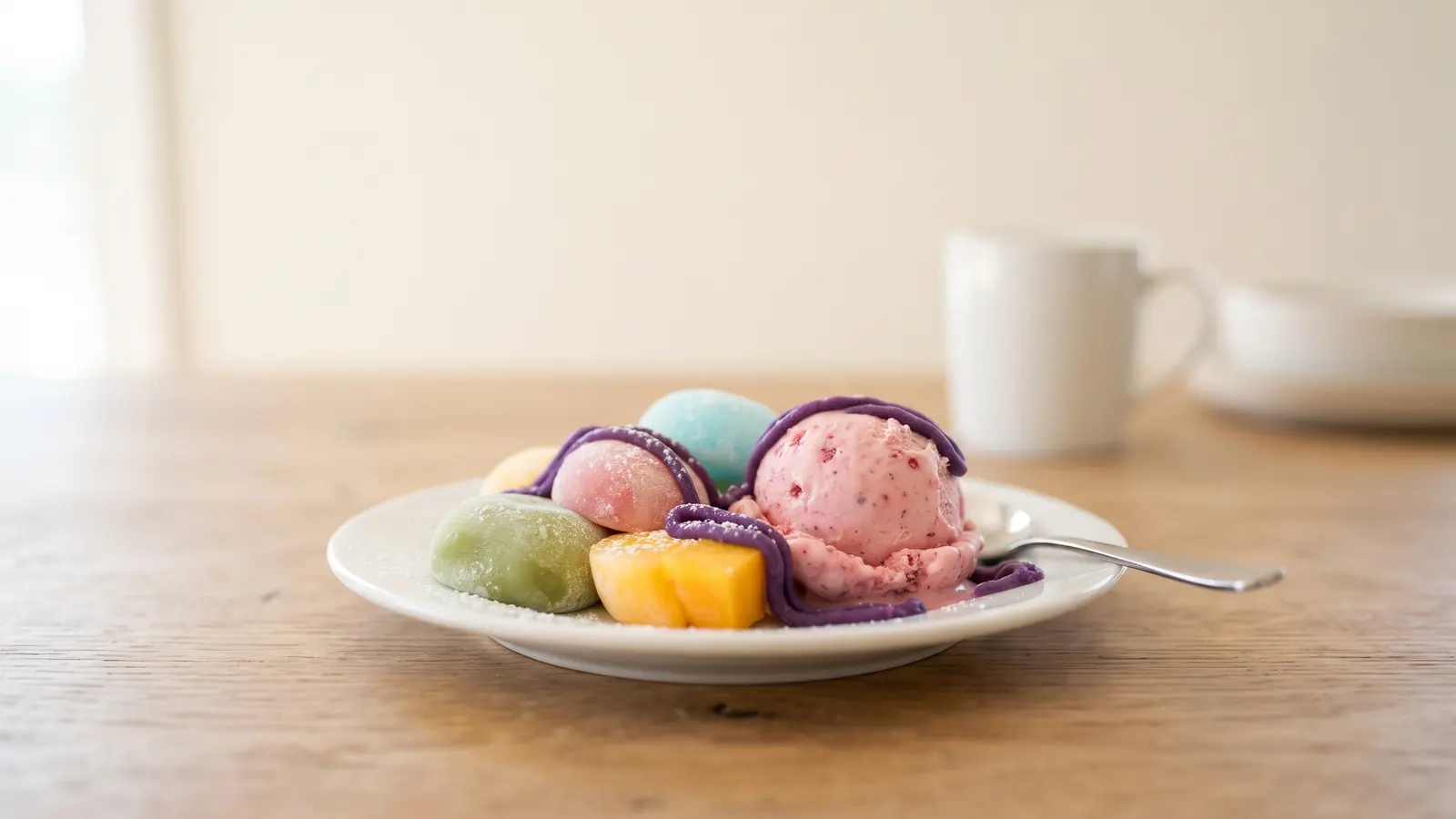
| Tteok (rice cake) | Chewy cubes or small balls, often called mochi |
| Condensed milk | Sweet, creamy drizzle over the ice |
| Fresh fruit | Mango, strawberry, peach or melon for brightness |
| Ice cream or sorbet | A cold, creamy scoop on top |
What is patbingsu?
Patbingsu is the original style of bingsoo: shaved ice topped with sweet red bean paste, often with rice cakes and a little syrup or condensed milk. The word pat means red bean.
Many Korean food writers treat patbingsu as the base from which other bingsoo flavours grew. Fruit, soybean powder, green tea, cheesecake and chocolate versions came later. A cafe that offers only a few flavours often includes the red bean one, because it is the version many people expect.
What is injeolmi bingsoo?
Injeolmi bingsoo is bingsoo topped with roasted soybean powder, called kinako in Japanese, and usually red bean and rice cakes. Injeolmi is a Korean rice cake rolled in soybean powder, and the bingsoo borrows its flavour.
The powder tastes nutty and slightly sweet, with a gentle roasted note. Against cold, milky ice and sweet red bean, the combination is balanced rather than sugary. It is among the most recognised Korean bingsoo flavours.
How do you eat bingsoo?
Bingsoo is eaten with a spoon, starting from the top and scooping a little ice together with a little topping in each bite. Eating at a steady pace keeps the ice fluffy before it melts into the syrup.
- Share one large bowl with spoons for everyone.
- Mix the toppings partway through to blend flavours, or keep them separate.
- Eat the ice before it softens, then enjoy the melted milk at the bottom as a sweet drink.
- Pair the cold dessert with a hot tea or coffee if the room is cool.
How big is a bingsoo portion?
A bingsoo portion is large because the dessert is made for sharing. Many cafes sell a smaller bowl for one or two people and a bigger bowl for groups.
Reviews of Fluffle Cafe note that its bingsoo comes in small and large sizes. Portion weights are not published, so the cafe is the place to ask about sizing before choosing for a group.
How is bingsoo different from other shaved ice?
Bingsoo differs from other shaved ice mainly in its fluffy milk-based ice and its heavy toppings. Japanese kakigori often uses clear ice with syrup, while Hawaiian shaved ice is flavoured with bright syrups.
| Style | Ice | Typical flavouring |
|---|---|---|
| Korean bingsoo | Soft milk ice | Red bean, soybean powder, fruit, cream |
| Japanese kakigori | Fine, clear ice | Syrups, sweet milk, matcha |
| Taiwanese snow ice | Milk ice ribbons | Mango, tea, taro |
| Hawaiian shaved ice | Crisp ice | Flavoured syrups |
What are popular bingsoo flavours?
Popular bingsoo flavours include red bean, injeolmi, mango, strawberry, melon, green tea, coffee, cheesecake and chocolate. Fruit flavours are especially common in warm weather, while red bean and soybean powder are the traditional choices.
- Red bean (patbingsu): the classic, earthy and sweet.
- Injeolmi: roasted soybean powder with red bean and rice cake.
- Mango: sweet, tropical, often with fresh fruit and cream.
- Melon or honeydew: light, floral and refreshing.
- Green tea: grassy and lightly bitter, with red bean.
- Coffee or chocolate: richer flavours that suit colder days.
What does a bingsoo cost to share?
Prices for bingsoo vary by cafe, size and toppings, and this guide gives no figures. Because a bowl serves two or more people, many groups split one large bingsoo and add a drink each.
When comparing menus, look at the size notes first. A small bowl may be enough for a solo treat, while a larger bowl with ice cream and fruit is closer to a shared dessert course. Asking staff about the portion is the simplest way to avoid ordering too much or too little.
Which bingsoo flavours are on Fluffle Cafe’s menu?
The recorded Fluffle Cafe menu lists injeolmi bingsoo, mango bingsoo, honeydew bingsoo and blueberry coconut bingsoo, and a red bean bingsoo mentioned in a review. This guide is independent and takes no orders.
According to listings, a peach bingsoo and a DaeJi Bar Bingsoo, which pairs chocolate crumble, strawberry jam ice cream and mochi brownie, were sold at a summer 2026 festival and may be seasonal. The injeolmi bingsoo is described as shaved ice dusted with roasted soybean powder and topped with red bean paste. Items change, so check the menu page and the hours and location page and confirm with the cafe before visiting.
Common questions
Is bingsoo the same as bingsu?
Yes. Bingsoo and bingsu are two English spellings of the same Korean word, which means shaved ice. Menus use either spelling, and the dessert is the same whichever way it is written.
Is bingsoo a drink or a dessert?
Bingsoo is a dessert eaten with a spoon. The ice is shaved so finely that it melts almost on the tongue, but it is served as a heaped bowl, not poured or sipped.
Why does bingsoo taste creamy?
Many shops freeze sweetened milk into a block and shave that instead of plain water ice. The milk gives bingsoo its creamy flavour and a soft, snowy texture that plain ice cannot match.
Can one person finish a bingsoo?
A small bowl suits one or two people, while a large bowl is made for sharing among a group. Because the ice melts quickly, eating at a steady pace helps the texture stay fluffy.
What is the most traditional bingsoo?
Patbingsu, shaved ice with sweet red bean, is the classic. The word pat means red bean in Korean. Fruit, soybean powder, cheesecake and chocolate versions are more modern variations on the same idea.
Before you go, check the Fluffle Cafe guide for the current hours and the menu.
This article is general information from an independent guide, not from Fluffle Cafe itself. For the store’s current details see hours and location.