Short answer
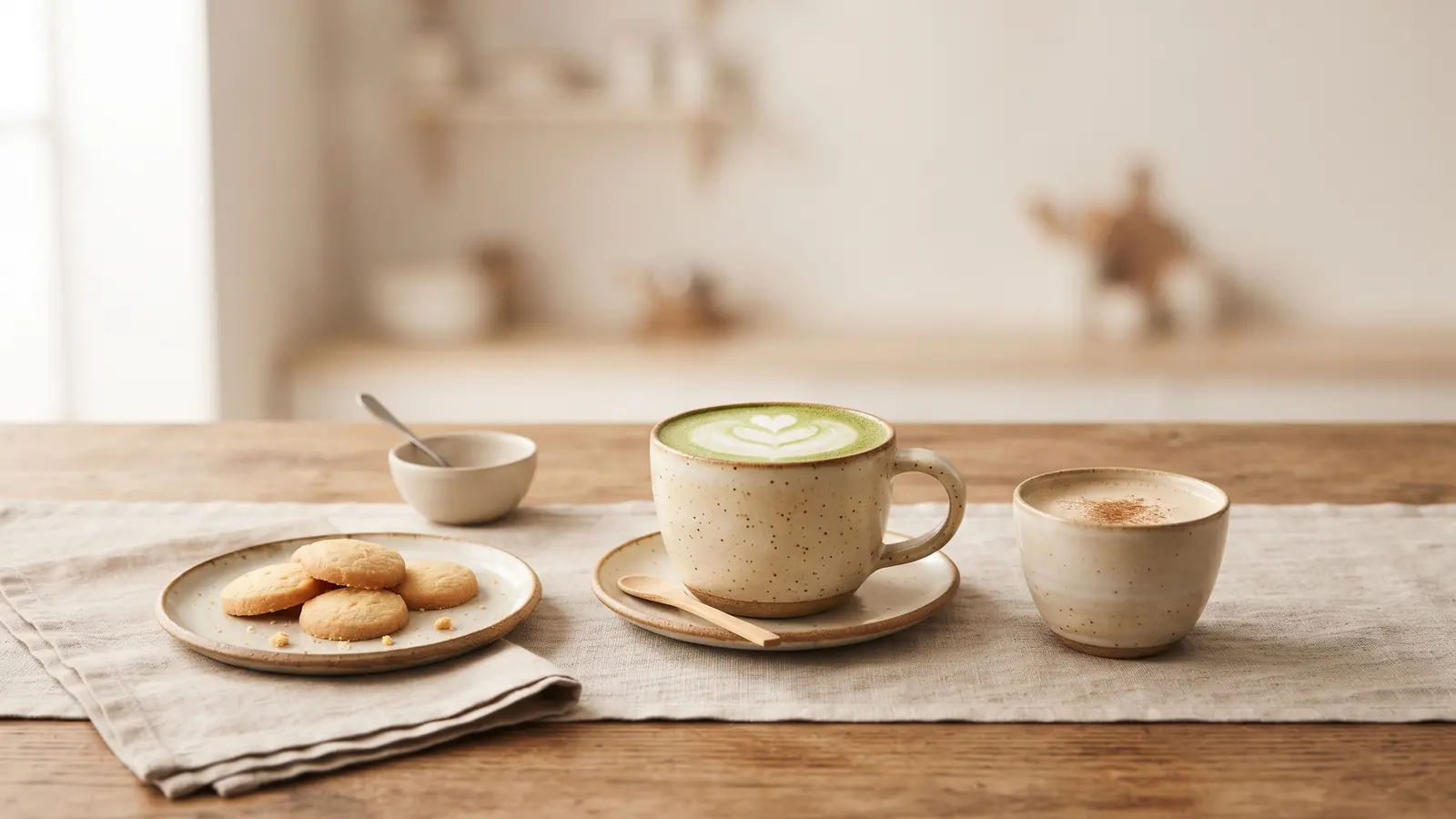
A matcha latte is a drink of finely ground green tea powder whisked with hot water, then combined with steamed or cold milk and often a little sweetener. It tastes grassy, creamy and gently bitter, and it is served hot or over ice.
A matcha latte is a drink made from finely ground green tea powder whisked with a little hot water, then combined with steamed or cold milk and usually a touch of sweetener. A matcha latte tastes creamy, grassy and slightly bitter, and it is served hot or iced.
What is a matcha latte?
A matcha latte is a milk-based tea drink in which matcha powder replaces espresso. Matcha is a Japanese green tea powder, and the latte is a modern cafe drink built on it.
The drink has three parts: matcha whisked smooth with water, milk and sweetener. The result is pale to bright green, depending on the powder and the amount of milk. Cafes in Japan, Korea and North America all serve versions of it, and many Korean dessert cafes offer one next to coffee.
What is in a matcha latte?
A matcha latte contains matcha powder, hot water, milk and, in most recipes, a sweetener such as sugar, simple syrup or honey. Nothing else is required.
| Ingredient | Role |
|---|---|
| Matcha powder | Gives colour, grassy flavour and caffeine |
| Hot water | Dissolves the powder into a smooth paste |
| Milk | Adds creaminess and softens the bitterness |
| Sweetener | Balances the natural bitterness |
How does a matcha latte taste?
A matcha latte tastes grassy, slightly bitter and creamy, with a gentle sweetness and a mellow savoury note called umami. Good matcha tastes fresh and smooth rather than sharp.
Milk rounds off the edges of the tea, which is why many people who find plain matcha strong enjoy it in a latte. A weaker latte tastes mostly of milk, while one with plenty of powder has a clear green tea character that lingers.
How is a matcha latte different from green tea?
A matcha latte differs from green tea because matcha is the whole leaf ground to powder, while ordinary green tea is leaves steeped in water and then discarded. Drinking matcha means drinking the leaf itself.
Matcha plants are shaded before harvest, which deepens the colour and the flavour. The leaves are steamed, dried, stripped of stems and stone ground. Sencha and other green teas are rolled, dried and steeped. Because matcha is consumed whole, it has a stronger flavour and a thicker body than infused tea.
What is the difference between a matcha latte and a regular latte?
A regular latte is espresso with steamed milk, while a matcha latte replaces the espresso with matcha. The milk and the glass look similar, but the flavour and the base differ.
- A coffee latte tastes roasted and bitter, from espresso.
- A matcha latte tastes grassy and creamy, from tea powder.
- Both contain caffeine, in amounts that depend on the recipe.
- Both can be served hot or iced and with plant-based milks.
How is a matcha latte made?
A matcha latte is made by whisking matcha with a small amount of hot water into a smooth paste, then adding steamed or cold milk. Whisking first prevents clumps.
- Sift one to two teaspoons of matcha into a bowl or cup.
- Add about 60 ml of water at roughly 80 degrees Celsius.
- Whisk in a zigzag motion with a bamboo whisk or small milk frother until foamy.
- Heat and froth the milk, or pour cold milk over ice.
- Combine and sweeten to taste.
What is the difference between a hot and an iced matcha latte?
A hot matcha latte is warm and creamy with a softer tea flavour, while an iced matcha latte is refreshing and a little more vivid in taste. The same powder and milk are used in both.
In an iced latte the matcha is whisked with a little hot water, then poured over ice and cold milk. The colour often looks brighter and the layers separate, which people like to mix with a straw. Hot versions emphasise the milk and the warm, toasty aroma.
Which matcha should you use for a latte?
Culinary grade matcha is the usual choice for lattes because milk and sugar soften its stronger flavour, and it costs less than ceremonial grade. Ceremonial grade is smoother and is meant to be drunk with water.
Look for a bright green colour, a fresh grassy smell and a very fine texture. Dull yellow-brown powder is usually old or low quality. Store the tin sealed and cool, since matcha loses colour and flavour with air and light.
What are the common variations of a matcha latte?
Common matcha latte variations include sweetened and unsweetened, plant-milk versions, vanilla or strawberry flavoured ones, and a layered matcha with fruit or cream. The base of matcha and milk stays the same.
- Strawberry matcha: milk with strawberry puree, topped with matcha.
- Coconut matcha: coconut milk or cream gives a tropical note.
- Matcha with cold foam: a salted or sweet foam floats on top.
- Hojicha latte: made with roasted green tea instead, toastier and less bitter.
- Dirty matcha: matcha with a shot of espresso added.
What are the best tips for a smoother matcha latte?
The best tips are to sift the powder, use water that is hot but not boiling, whisk to a foam and add milk gradually. Each step reduces clumps and bitterness.
- Sift the matcha to remove lumps that a whisk cannot break.
- Keep the water near 80 degrees Celsius, since boiling water scorches the tea.
- Whisk until a fine foam forms on the surface.
- Choose fresh powder from a tin opened recently.
- Taste before sweetening, since quality matcha needs less sugar.
Is a matcha latte on Fluffle Cafe’s menu?
Fluffle Cafe’s recorded menu lists a Matcha Latte, which a reviewer mentioned. The same drinks list includes a Misutgaru Latte, made with roasted multigrain powder.
No size, milk options or sweetness levels are recorded, and the listing may be out of date, so the cafe is the best source for details. See the menu page for the recorded items and the hours and location page for the address. This guide is independent and takes no orders.
Common questions
Does a matcha latte contain coffee?
No. A matcha latte is made from green tea powder and milk, not espresso. A dirty matcha adds a shot of espresso, but a standard matcha latte contains no coffee at all.
Does a matcha latte have caffeine?
Yes. Matcha is made from tea leaves, so it contains caffeine. The amount varies with how much powder is used, so a cafe can tell you what its serving size contains.
Why is my matcha latte bitter?
Bitterness usually means too much powder, water that was too hot, or a lower grade of matcha. Using water around 80 degrees Celsius and a good culinary or ceremonial powder gives a smoother taste.
Is matcha the same as green tea?
Matcha comes from the same plant as other green tea, but the leaves are shade grown and ground whole into a powder. You drink the leaf itself rather than an infusion of it.
What milk works best in a matcha latte?
Whole milk gives a creamy, rounded drink. Oat milk is a popular plant-based option because it froths well and tastes mild. Almond and soy milk also work, with a thinner or nuttier result.
For the address, opening hours and menu, see Fluffle Cafe in Richmond.
This article is general information from an independent guide, not from Fluffle Cafe itself. For the store’s current details see hours and location.